
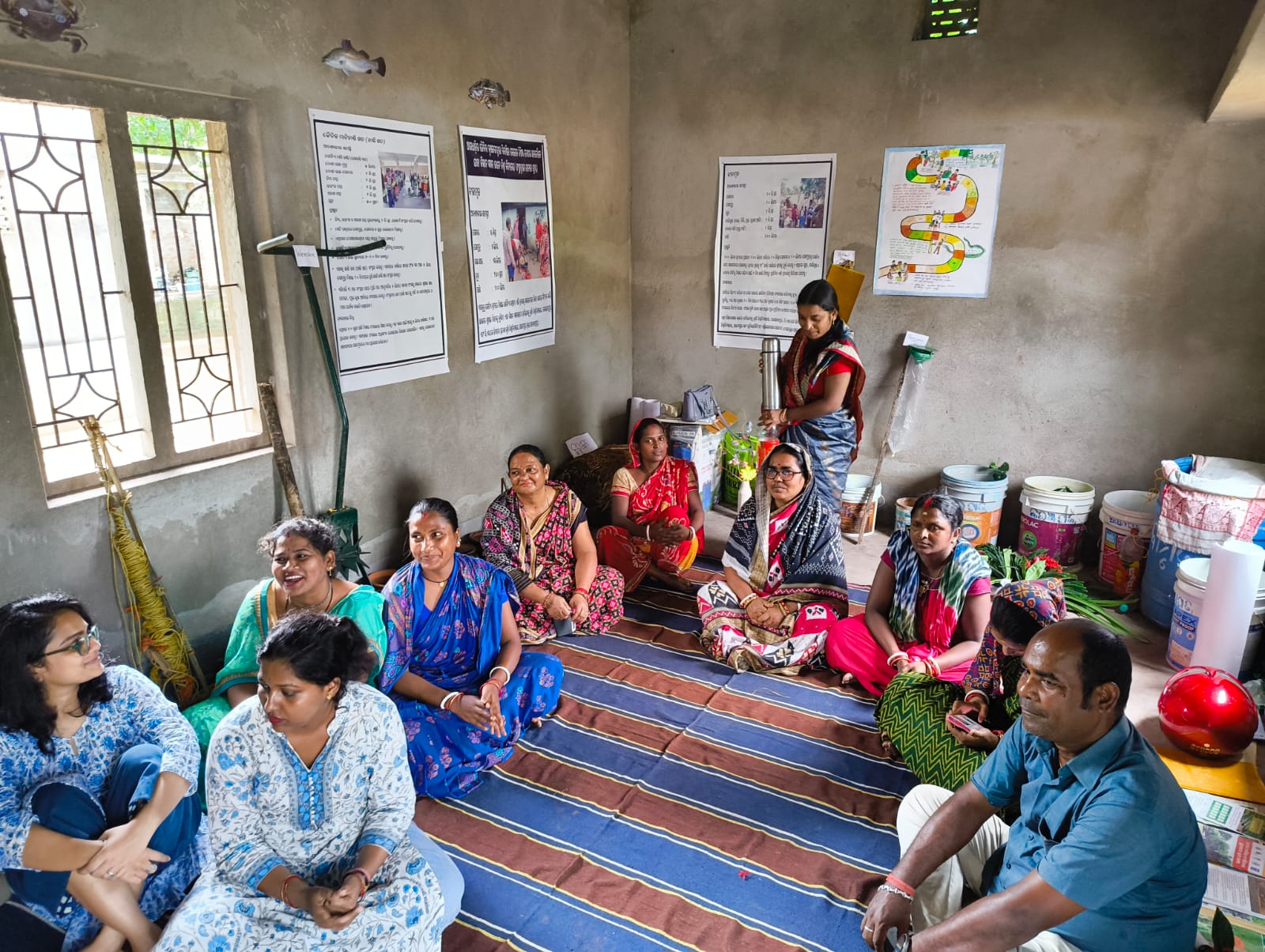
In 2023, a group of partners came together and took a collaborative approach to build a sandbox.
The idea was to test and create a place-based, ecosystem-led model that can build climate resilience and community stewardship.
What is a place, though? It is more than the sum of its parts, the geography, the people and all the elements it comprises – air, rivers, lakes, seas, soil, hills, bugs, birds, animals, plants, trees, and the people, their cultures, livelihoods, relationships, flow of money, and more.
Why was Kendrapada chosen?
With a population of about 15 lakhs across 9 blocks and close to 1600 villages, Kendrapara is a coastal delta district located between the Brahmani, Baitarani, and Mahanadi rivers, home to the Bhitarkanika mangrove ecosystem. It is highly vulnerable to cyclones and saline floods. Predominantly agrarian, with paddy, pulses, and fisheries, it is also largely rural and informal with significant job-linked migration.
Facing mangrove loss, saline intrusion, and human–wildlife conflict, especially around crocodile zones, Kendrapara has been a focus district for the government (with a rich political past) in Odisha’s coastal resilience programmes, emphasizing pond rejuvenation, mangrove restoration, and women-led adaptation.
The objective of this initiative was to evaluate if Kendrapara had the potential to emerge as a model for ecosystem-based rural resilience, blending conservation, livelihoods, and community leadership.
That’s how the Kendrapada Sandbox was formed, of a cluster of 205 villages from the larger district.
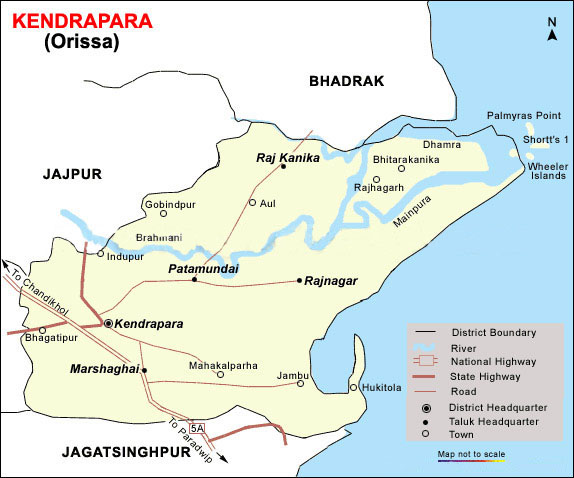
Kendrapada district map, Odisha (Source: Odisha Tourism)
Identifying the Problems
The first step of the Kendrapara Sandbox was deep sensemaking. Instead of coming in with pre-defined interventions, it was important to listen to the land and people. While we have witnessed multiple frameworks for this “ownership” discovery, Goonj’s Gram Swabhimaan approach was deployed in a DIY (do-it-yourself) format as part of the process and handed over to community representatives. The community contextualized the format for Kendrapara and went ahead to implement it.
Some of the critical challenges surfaced by the exercise were:
- Ecological Degradation: The region was vulnerable to repeated cyclones, saline intrusion, and erosion.
- Livelihood Insecurity: Traditional agriculture and fishing were becoming unsustainable, forcing seasonal and distress migration (even generational migration – plumbers from Kendrapara work all across India, and in the Gulf countries and West Asia).
- Cultural Disconnection: Mangroves and water bodies, once integral to local identity, were now viewed as threats.
- Institutional Fragmentation: Multiple schemes existed but there was limited local convergence and ownership.
Through participatory mapping, citizen juries, and informal dialogues led by the local organisations and facilitated by the sandbox team, the discovery process shifted the focus from ‘what is wrong here?’ to ‘what is happening here, really?’.
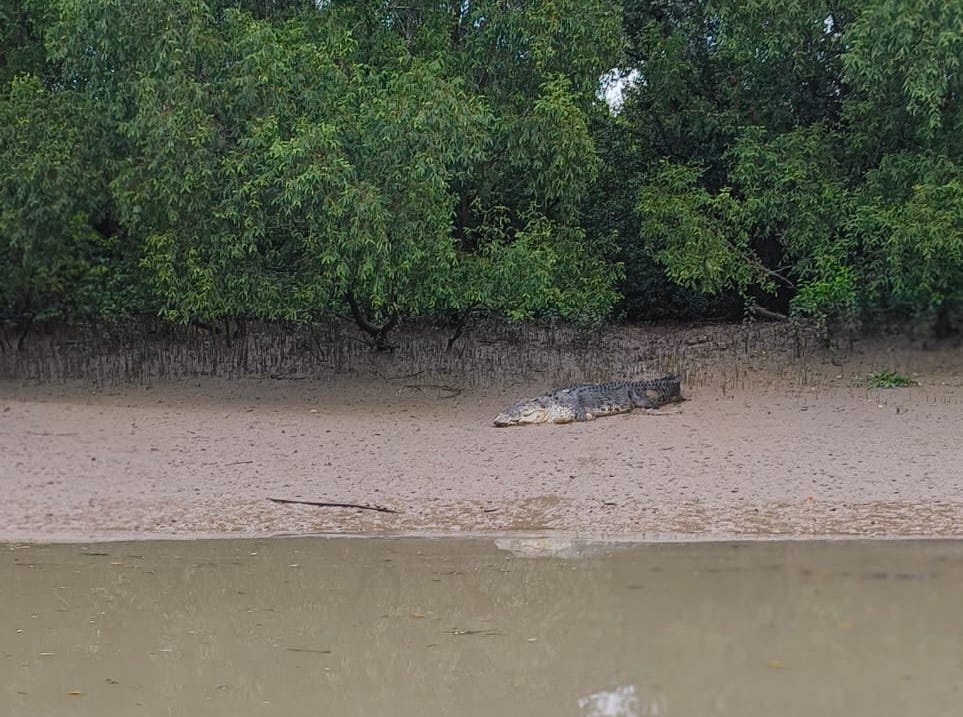
Bhitarkanika National Park
Community Ownership: People as Architects of Change
Instead of participating in projects, local actors led problem-solving. Bit by bit, the ownership took shape.
- Women Climate Champions: Over 300 women across Odisha, including 100 in Kendrapara, were trained as Climate Champions under the ECRICC programme (UNDP, Mar 2025). They adopted resilient farming, led mangrove replantation, and shared knowledge through peer networks.
- Self-Help Groups and Youth Networks: SHGs, youth clubs, and panchayat representatives formed the nucleus of action. They engaged in Citizen Juries, Climate Recipe exhibitions, and Gram Swabhiman dialogues—turning abstract consultations into tangible community voice mechanisms.
- Cultural Re-framing: The narrative around mangroves shifted from fear to friendship. Community members began to see mangroves not as obstacles but as natural allies—providing flood protection, honey, crab farming etc.
- Local Institution Building: Nature’s Club, a Kendrapara-based NGO, evolved into the core local institution—holding the space for external collaborations while ensuring the ecosystem remained locally governed.
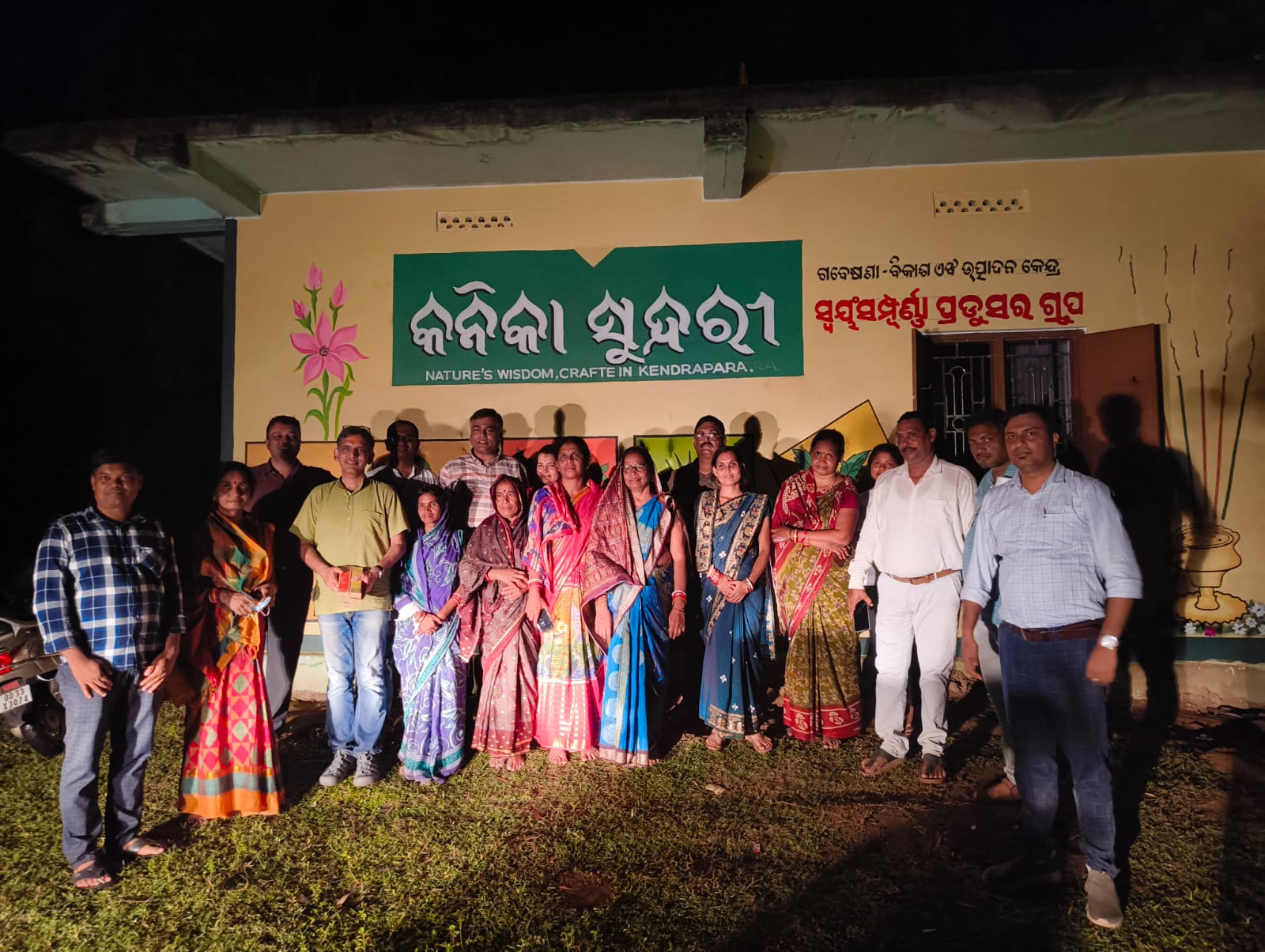
Kanika Agarbatti Producers Group, Kendrapada
Over the course of 2 years, livelihoods diversified building resilience:
- Agarbatti Producer Groups (PG) – 3 producer groups comprising over 150 women are making organic agarbattis (incense sticks) that are being sold to corporates like ITC
- SRI cultivation – Saline-resistant rice varieties introduced in 84 villages were adopted by 7000+ farmers
- Nalia artisan group – over 1000 families across 5 villages started making handicrafts using the Nalia grass
- Waste to wealth tailoring – 150 women came together to form 7 tailoring clubs
Azolla cultivation – 5000 growers across 120 villages are providing azolla as animal feed and biofertilizer - Mushroom cultivation – 45 SHGs were trained on mushroom cultivation, who are using paddy stubble as the growing medium for mushrooms
- Organic pesticides & fertilisers are being produced by over 5000 families
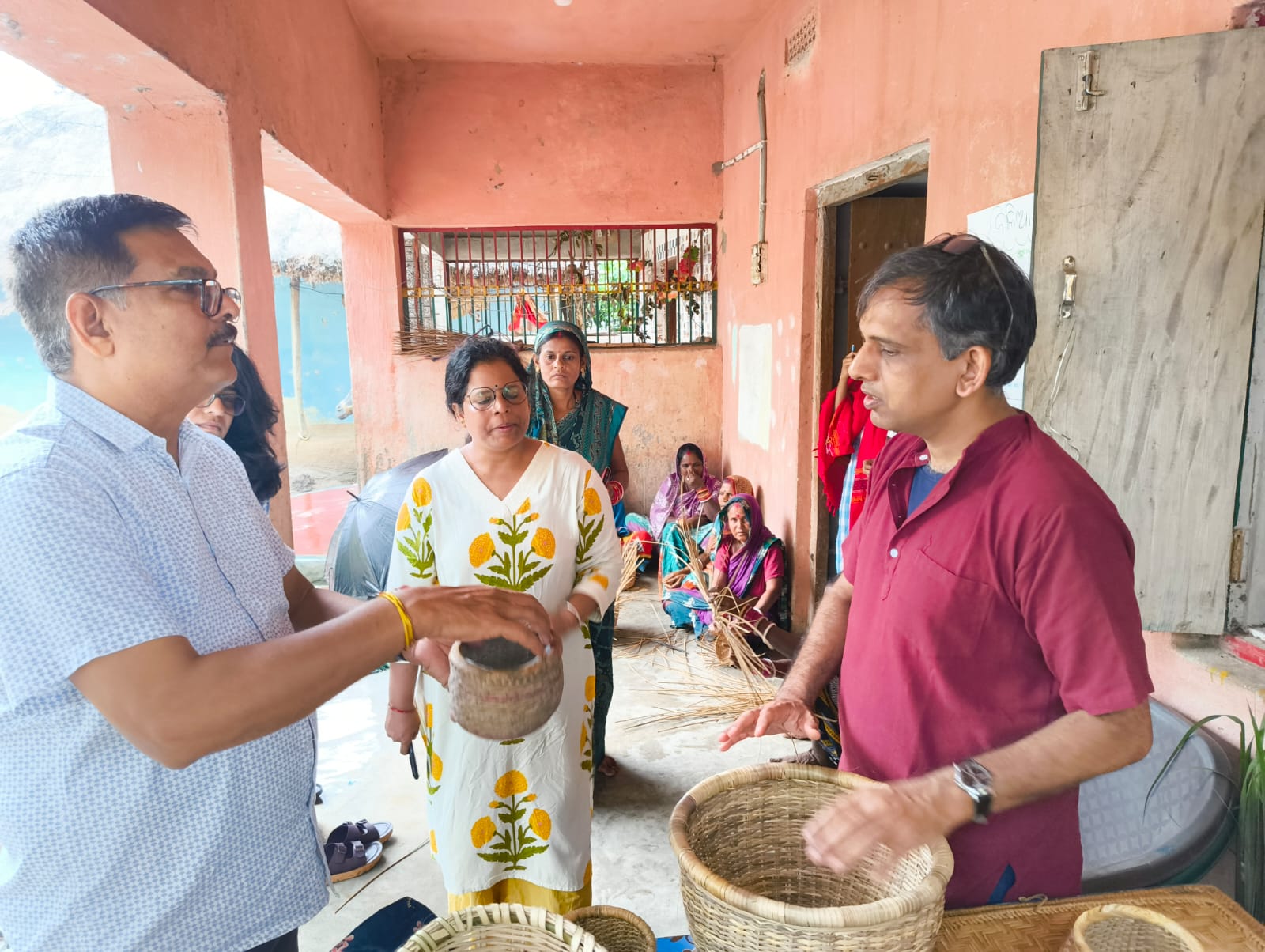
Nalia Grass Artisan Producer Group – Baghataila Village in Kendrapada
Key Actors and Orchestrators
The Kendrapada Sandbox brought alive place-ownership through several actors, enablers, solutions, and infrastructure:
Grassroots Stewards: Coastal agriculture reforms, mangrove restoration, and awareness drives led by Women Climate Champions and village youth
Civil Society Partners: Nature’s Club, WellLabs, Socratus Foundation, and Goonj
Government and Global Partners: Odisha Forest & Environment Department, UNDP, GCF, Kendrapara District Administration
Media and Cultural Amplifiers: Local influencers and journalists produced short films and reels during the Mangrove Patha Utsav 2024
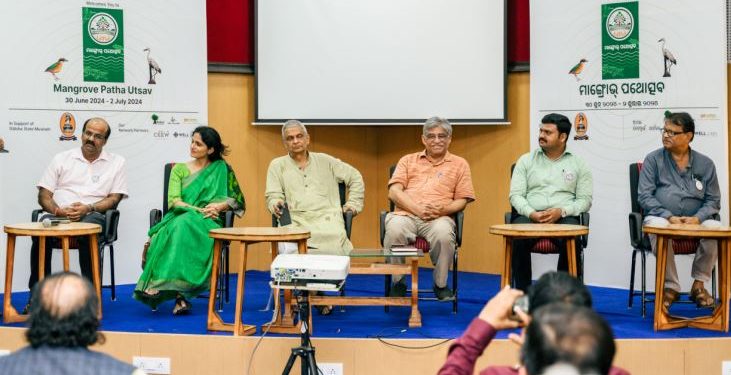
Mangrove Patha Utsav 2024, organised by Socratus Foundation and Nature’s Club
Lessons and Takeaways
The sandbox is an example of true on-ground collaboration for any organisation working at the grassroots level.
Start with Listening: Real insight comes from community sensemaking.
Shift the Story: Change local narratives to build intrinsic motivation.
Identify & Strengthen Anchors: Facilitation models like Nature’s Club that played the role of ecosystem stabiliser ensure continuity.
Design for Emergence: Replace fixed project plans with prototypes that allow iterations and enable adaptive scaling.
Integrate Institutionally: Bottom-up (community-led) innovations have the power to influence formal government programs and systems.
The Result
The Kendrapada Sandbox brought together fragmented efforts and transformed them into a scalable, locally sustained climate resilience model. The journey evolved through iterative community-led experimentation: mapping, co-designing, celebrating, and transferring ownership. It helped communities realise their power–the power to change, build and sustain.
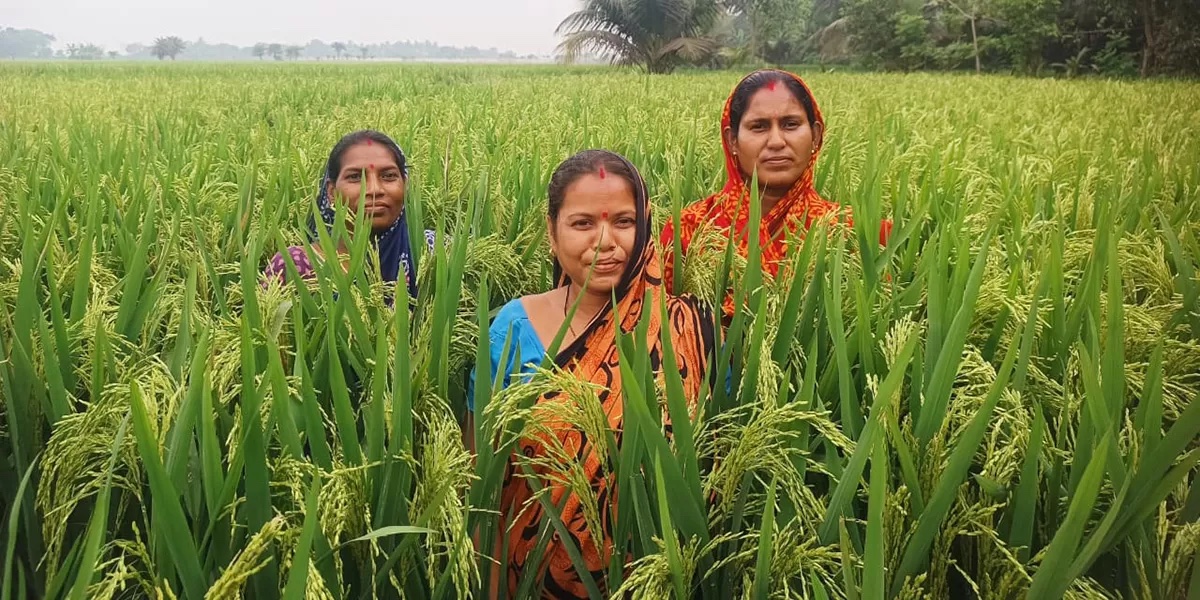
Women Climate Champions (Photo: UNDP India)
Mentions in Public Sources (2024–25)
- https://www.newindianexpress.com/good-news/2025/Jul/06/eco-champions-empower-village-communities-for-sustainable-livelihood
- https://www.adaptation-undp.org/women-who-tamed-tides-meet-climate-champions-odisha
- https://www.orissapost.com/mangrove-patha-utsav-collaborative-efforts-key-to-save-coastal-ecosystems/
- https://www.thehansindia.com/andhra-pradesh/centre-to-curb-migration-launched-994010
Yes, it is built on trust, collaboration, and local ownership.