
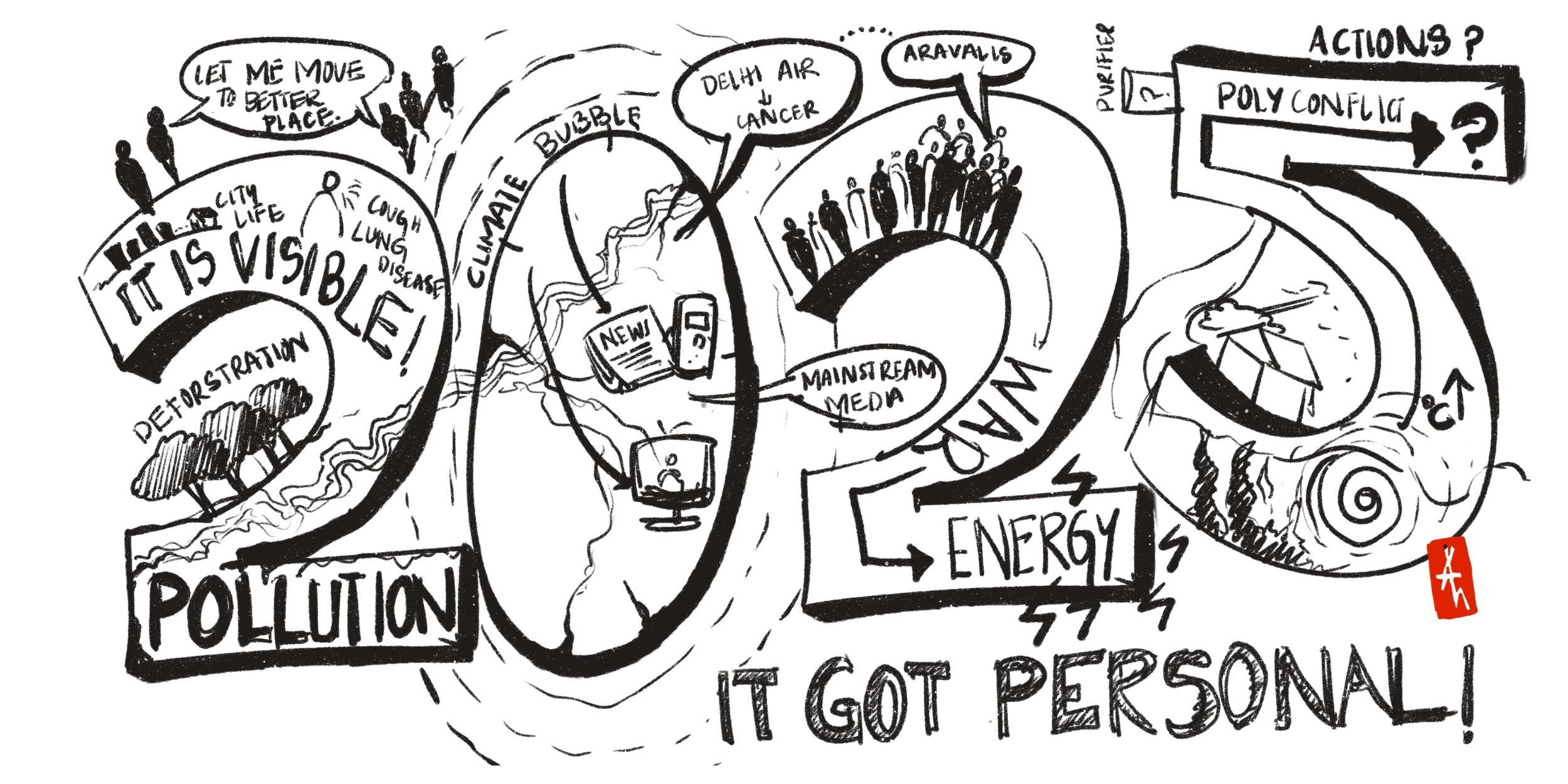
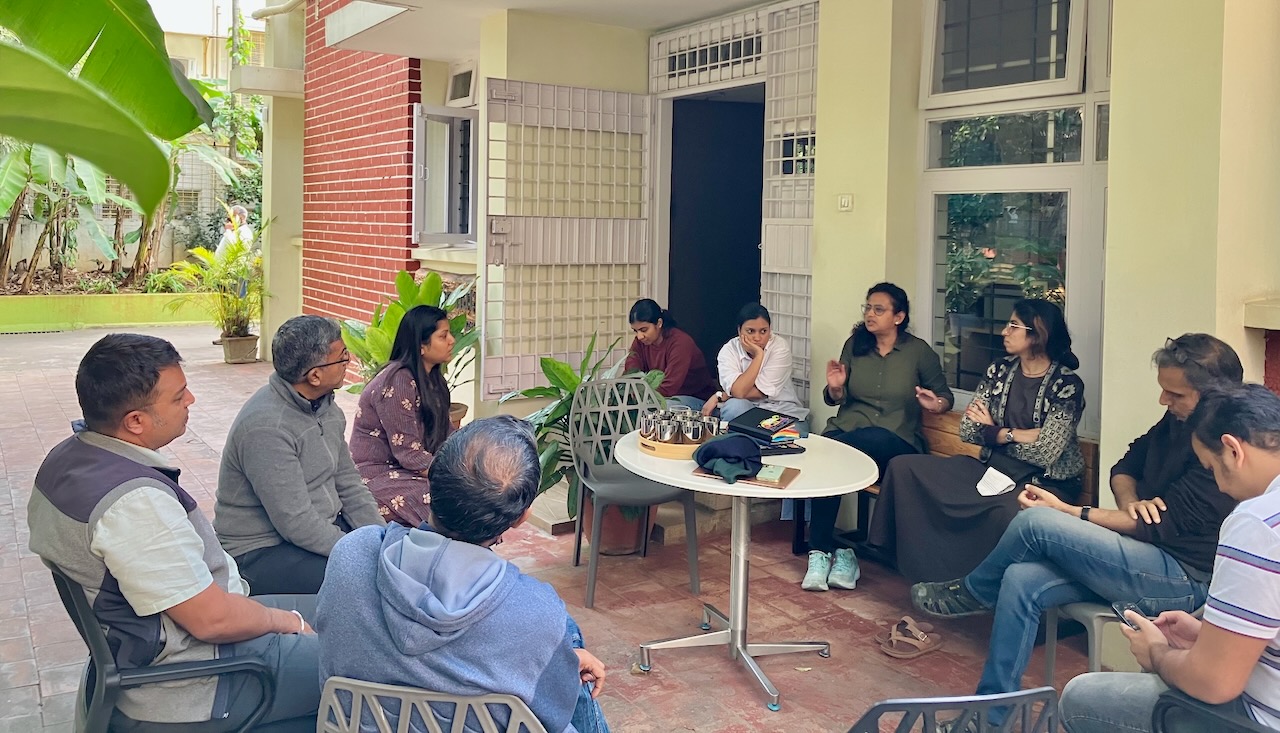
Our team gathered last week, on a cold January afternoon soaking in the warm sun, to reflect on how the past year had been for each of us. A few themes kept bubbling up.
2025 felt like the year climate impact got personal.
We could all recount examples of people in our circles, many outside the climate bubble, who were deeply impacted by climate change or pollution this year. We knew of friends who were suffering from a stubborn cough for months, acquaintances who were seriously considering moving out of the city they had lived in for years, and of far too many families with at least one member suffering from cancer.
Our own anecdotes weren’t isolated stories as much as fragments of a larger pattern. We felt something had shifted in public conversations around climate change, pollution, and the environment. This was visible across mainstream media, digital content creators, and even popular culture, like stand-up comedy1. The sheer volume of conversation certainly seems to have amped up especially around a few issues, such as air pollution, quality of life in our cities, and deforestation. The discourse may still miss the nuances or fall short of bringing out the full picture. For instance, we talk about air quality in Delhi and the destruction of the Aravalis without necessarily making the connection between the two. Or we talk about cancer without consistently examining food systems or the explosion of chemicals and microplastics2. So, while it’s undeniable that talking about climate has gone beyond the ‘climate bubble’, whether this growing visibility translates into deeper understanding of the crisis and pathways of action, remains to be seen.
The next obvious question was, so what next, what’s happening beyond the talk, the angst and the rhetoric?
We recalled examples of collectivising, most notably Delhi citizens coming out to protest the toxic air quality3, but also examples of people standing up to protect the last few wild spaces we have left – Kancha Gachibowli in Hyderabad4, Dhol ka Badh in Jaipur5 and Aravalis in Delhi6. We are seeing markers of governments, institutions, and corporations beginning to acknowledge these impacts, as they are becoming more and more undeniable. We saw hope in innovations from new players offering alternate solutions to problems that promise real change on ground. However, we also saw a trend of individuals choosing private solutions as a last resort to address the failing public goods. For instance, installing air purifiers to tackle air pollution or even moving cities to protect themselves7. Of course, these options are unevenly available, shaping very different realities for those who can opt out and those who cannot. And while it may not be structural or solving the root of the problem, it is what individuals seem to have control over. We may fear the long term outcomes of these pathways, but these are perfectly rational responses in a situation where systems and institutions are failing to respond fast enough and struggling to address these challenges in a structural way.
In fact, that seems to be a theme for not just climate change. All over the world, across many areas we seem to be in an era of chaos – wars, tariffs, and energy. As Rajesh aptly put in this piece8, we may be moving to a zone of polyconflict and not polycrisis. We are not in a crisis, a term that implies that it is temporary and we will at some point snap back or solve our way back into an equilibrium that we knew in the past. Our current situation may be better defined as a ‘polyconflict’ which will evolve to a new normal and a new future. We are already seeing signs of this, for instance several areas in the US have seen and are expected to have such devastating forest fires that they have been declared as uninsurable9.
What we remain curious to see is what the new normal would look like and believe that the actions and decisions that each of us – institutions, organisations and individuals – take now may well alter the course of history towards this and may indeed make 2026 a seminal year.
– Team Rainmatter Foundation
Sources:
- https://airqualitynews.com/health/comedians-stand-up-to-air-pollution-in-mumbai/
- https://thediplomat.com/2024/10/punjabs-cancer-train-runs-on-hope/
- https://www.indiatoday.in/cities/delhi/story/as-delhi-chokes-residents-rally-at-india-gate-demanding-action-on-pollution-congress-aap-join-in-2816245-2025-11-0
- https://www.landconflictwatch.org/conflicts/students-residents-rally-to-save-400-acre-kancha-gachibowli-land-supreme-court-steps-in#
- https://www.indiatoday.in/cities/jaipur/story/human-chain-protest-save-2500-trees-dol-ka-badh-forest-area-jaipur-campaign-2734018-2025-06-01
- https://www.bbc.com/news/articles/cn5ln4wee7wo
- https://www.thehindu.com/news/cities/Delhi/smog-refugees-delhi-air-pollution-exodus/article70349105.ece
- https://www.ranganaut.com/p/bhumics-sidebar-from-polycrisis-to
- https://www.nytimes.com/interactive/2024/12/18/climate/insurance-non-renewal-climate-crisis.html